
The CSI300 index of the largest listed companies in Shanghai and Shenzhen ended at 3,355.16 points and the Shanghai Composite Index at 3,116.35.
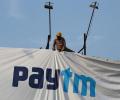
With around 33 deals valued at USD 647.5 million, India has the highest investment in the fintech segment compared to China's USD 284.9 million during the quarter ended June 30, 2020, the report released by RBSA Advisors said.

Among the Sensex firms, Adani Enterprises and Adani Ports sustained their gaining momentum and traded higher by 4.40 per cent and 4.37 per cent, respectively. BPCL, Axis Bank, Mahindra & Mahindra and SBI were the other major gainers. On the other hand, HCL Tech, Infosys and Bajaj Auto traded in the negative zone with a loss of up to 1.54 per cent.

Market research firm GfK Automotive's Barometer of Automotive Awareness and Imagery Study found that Chinese and Indian auto-makers could face a similar purchase consideration curve to Korean vehicles when they launched in the US.

Since 2000, China has had the world's largest outflow of HNIs.

'Three manufacturing sectors can create jobs by the million: Apparel, food, and electronic assembly.' 'Let's talk to them and ask them what it would take to scale by a factor of ten,' suggests Naushad Forbes.

Whoever can make acquiring smartphones more affordable will win the sales game.

China's National Health Commission, (NHC) said on Saturday that 18 new confirmed coronavirus cases were reported in the country on Friday, including six domestically-transmitted cases in Beijing. Also on Friday, seven new asymptomatic cases were reported, taking the total number of such people in quarantine to 98, it said.

From the Sensex pack, Mahindra & Mahindra emerged as the biggest gainer, climbing nearly 5 per cent. Power Grid, Tata Motors, Reliance Industries, NTPC, Axis Bank, Nestle, Kotak Mahindra Bank, Asian Paints and Wipro were among the other major gainers. Maruti, HCL Technologies, Bajaj Finance, IndusInd Bank, Infosys and Tata Steel were among the laggards.

Focus will, however, shift back to corporate earnings, liquidity situation and global events - specially crude price.
Bharti Airtel was the biggest gainer in the Sensex pack, rising 2.37 per cent, followed by Mahindra & Mahindra, HCL Tech, Tata Motors, Tech Mahindra, HDFC Bank, Wipro, Tata Consultancy Services, Axis Bank and Nestle. Asian Paints, Hindustan Unilever, Bajaj Finserv and NTPC were among the laggards.
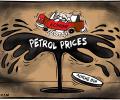
Amid news of a fuel shortage in some parts of the country and wider unrest over fuel issues in the neighbourhood, an analysis of the data from international tracker globalpetrolprices.com shows that the per litre price of petrol is higher in India than in seven out of its nine neighbours.
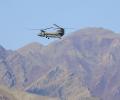
'Our strategy should be to 'hold the line' in the north on the Sino-Indian land frontier, but maintain and, if possible, enlarge India's current edge in the maritime south.'

Rising crude oil prices, traction in China equities and inflation concerns back home are casting a shadow on the Indian equity markets in the short term, believe analysts at Jefferies. They said this could see the markets remaining range-bound in the near term before the next leg up.


In what appears to be an astonishing revelation, a US-based scientist who worked at a controversial research lab in China's Wuhan, has said that Covid-19 was a "man-made virus" that leaked from the facility.
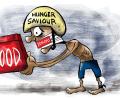
Given that there has been no negative news flow around Zomato, analysts believe it's time to lap up the shares at lower levels.

The smartphone category as a whole was expected to spend around Rs 1,000 crore on marketing and promotional activities over the next six months, even as India unlocks gradually, said media industry experts. This spending is expected to come down, as firms temper their launches.

The trend was visible in the early trade on Thursday as investors indulged in trimming their bets after the minutes of the US Federal Reserve's September meeting indicated a possible rate hike this year.

After rallying 543 points in the morning session and touching the 40,000-mark, the BSE Sensex surrendered all gains to close at 38,628.29, showing a loss of 839.02 points or 2.13 per cent. Similarly, the NSE Nifty tanked 260.10 points or 2.23 per cent to end at 11,387.50.

Among the Sensex firms, ICICI Bank and SBI led the index with the maximum gains of 4.68 per cent and 3.99 per cent, respectively. Other major gainers were Larsen & Toubro, Kotak Mahindra Bank and HDFC Bank. On the other hand, Wipro and Tata Motors defied the trend and traded in negative.
'India has the potential to reduce its trade deficit with China by $8.4 billion in FY21.'

From the 30-share Sensex pack, 26 scrips closed with gains led by Tata Motors that zoomed 16.63 per cent after the company reported narrowing of losses in the September quarter.

Given the security dilemma prevailing between India and China, India should curb the operation of Chinese telecom companies in India, asserts Dr Rup Narayan Das.

India witnessed the highest increase in airfares among the 10 top aviation markets in the Asia-Pacific and West Asia collectively across both domestic and international flights Q4 2019 and Q4 2022 in nominal terms, according to research by Hong Kong-based Airports Council International (ACI). India, where fares went up by 41 per cent, was followed by the UAE (34 per cent), Singapore (30 (per cent) and Australia (23 per cent). The study, which was undertaken in collaboration with Flare Aviation Consulting, examined around 36,000 routes in the top 10 aviation markets in Asia-Pacific and West Asia.
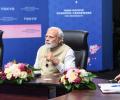
As US President Joe Biden launched a new trade deal with 12 Indo-Pacific nations, including India, to enhance trade, economic and investment opportunities, China, which sees the pact as a threat to its dominance in the region, went on the offensive against it, promising more opening up, while the official media here termed it as "economic Nato".
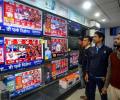
The reason? Price of open cell panels has gone up 15%. One of the main components in the manufacturing of TV sets, open cells contribute to 60%-65% of the manufacturing cost.

The rupee depreciated by 9 paise and settled at its all-time low level of 83.13 against the US dollar on Wednesday, weighed down by a surge in crude oil prices and strong American currency. Forex traders said the Indian rupee depreciated as the US dollar rose to the highest levels in six months. Moreover, elevated crude oil prices also weighed on rupee.

Stock markets squandered early gains but managed to end in the green on Friday, propped up by heavyweight Reliance Industries which announced another stake sale deal for its digital platform. A strengthening rupee and firm global cues also supported the domestic bourses, traders said.
From the Sensex pack, Infosys jumped the most by 3.67 per cent. Asian Paints, HCL Technologies, Reliance Industries, ICICI Bank, Wipro, NTPC, Tech Mahindra, Bajaj Finserv and Larsen & Toubro were among the other major gainers. State Bank of India, Bajaj Finance, Titan, Tata Steel, Tata Motors and UltraTech Cement were among the laggards.

Since the start of this financial year (FY24), the stock of Aurobindo Pharma has been one of the top pharma gainers, enhancing investor wealth by over 68 per cent, with a third of those gains coming in the last three months. The stock is riding on multiple triggers given its investments in the production-linked incentive or PLI scheme, biosimilars, injectables and vaccines, which should drive revenues and profits over the medium term. Better than expected performance after the June quarter results led to a revision of earnings estimates for FY24 and FY25.

Infosys was the top gainer in the Sensex pack, rallying around 7 per cent, followed by TCS, IndusInd Bank, ONGC, HDFC Bank and HCL Tech. On the other hand, ITC, Bajaj Finance, Kotak Bank and Sun Pharma finished in the red.

Asian Paints dropped the most by 1.33 per cent. IndusInd bank fell 1.2 per cent, Axis Bank by 1.19 per cent, SBI by 1.12 per cent, Bajaj Finance by 1.07 per cent, Nestle by 1.04 per cent, and TCS by 0.97 per cent. Hindustan Unilever, Reliance Industries, Power Grid and Kotak Bank also retreated. Maruti Suzuki was the lead gainer, rising by 2.22 per cent.

The weak April-June quarter (first quarter, or Q1) results of the largest listed specialty chemical maker, SRF, and multiple global headwinds for the sector are expected to weigh on the prospects of Indian specialty chemical companies in 2023-24 (FY24). Stocks in the sector (down 7-18 per cent) have underperformed the benchmarks (up over 10 per cent) in the past three months, and given the multiple challenges, the trend is likely to continue. Kotak Institutional Equities expects a very weak quarter (Q1FY24) for the sector due to destocking, demand weakness across certain critical end-use industries, and price erosion amid intense competition from Chinese suppliers.

Middle class and first time smartphone buyers in emerging markets such as India and China were among the major drivers of iPhone sales in January-March period

Any market correction, analysts say, would be an attractive entry point for risky assets, which should do well over the medium-to-long term.

Market participants attribute the stability to the Reserve Bank of India's timely intervention in the foreign exchange market, both in terms of selling and buying dollars.

We asked colleagues, present and past, to reflect on a man who has made such a difference to their lives and careers. Here it is then, a rich collection of memories that offer enchanting glimpses of the enigmatic Ajit Balakrishnan.

'Shark fins are the most sought-after shark product.'

'When manufacturing or even services cannot generate the kind of employment they are looking for, they prefer to be unemployed rather than under-employed.'
